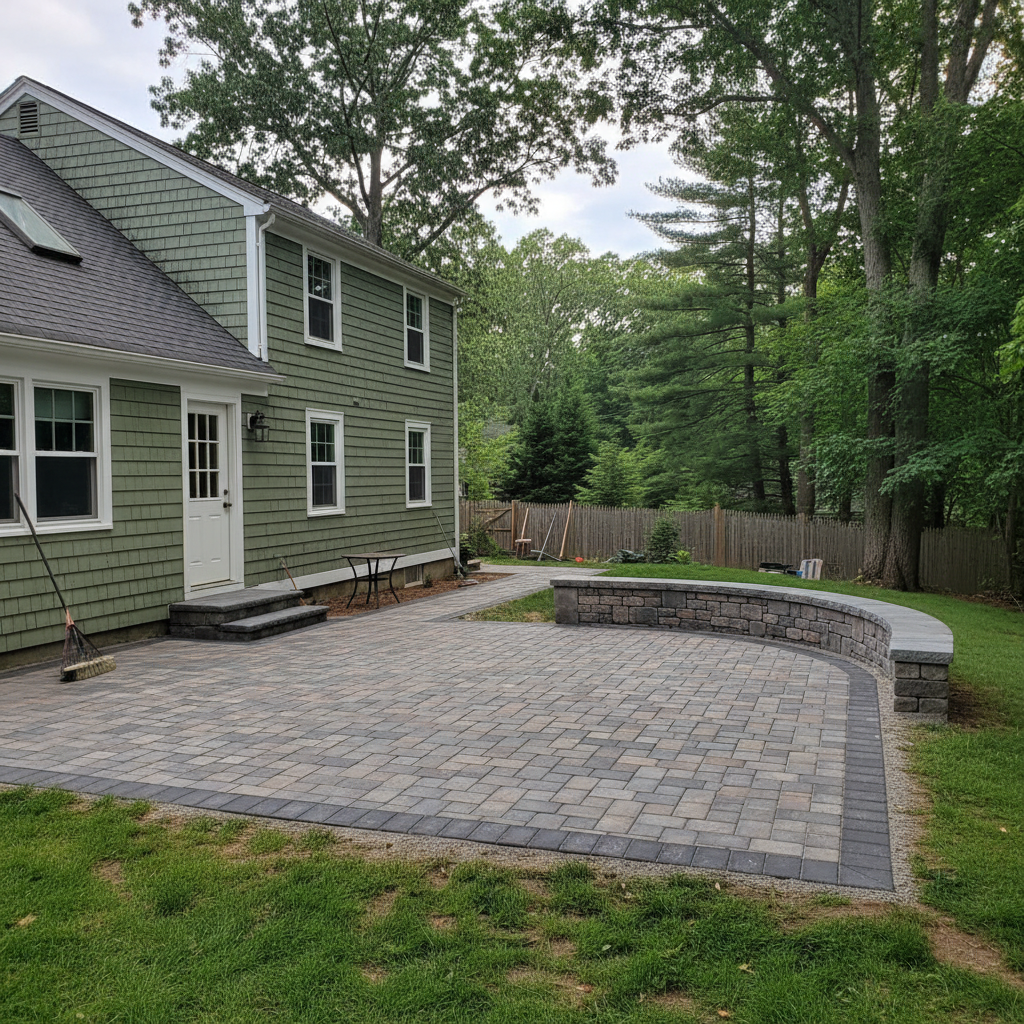
Alright, let's talk pavers. Everyone loves how a new paver patio or driveway looks – they're tough, they really spruce things up, and they can seriously boost your home's curb appeal. But when you start looking into getting them put in, the numbers can bounce all over the place, and it's easy to feel totally lost. As someone who's been doing this kind of work around Brookline for years, I've seen just about everything, and I want to give you the real story on what paver installation actually costs here in our neck of the woods.
What Makes the Price Go Up or Down?
You'd think it'd be simple, right? Just square footage multiplied by a rate. But it never works out that way. A whole bunch of things affect the final cost, and understanding them helps you make sense of your quote.
- Material Choice: This is a big deal. Basic concrete pavers are usually your cheapest bet, typically running anywhere from $3 to $8 per square foot for just the material. Natural stone pavers, like bluestone or granite, look amazing but cost more, often $10 to $30 per square foot, sometimes even more for truly unique pieces. Permeable pavers, which are fantastic for managing stormwater runoff, also tend to be on the higher side because of their special design.
- Site Preparation: Here's where a lot of the labor cost comes in. If your yard is flat and clear, fantastic! But if we have to dig out old concrete, yank out a bunch of shrubs, or level a sloped area, that's extra work. Proper base preparation is absolutely crucial if you want your pavers to last. We're talking about digging down 6-12 inches, putting down geotextile fabric, and compacting several layers of crushed stone. Skimp here, and you'll end up with shifting pavers and drainage problems down the road – believe me, I've seen it happen too many times, especially with the heavy clay soils we often find in parts of Brookline, like around the Fisher Hill neighborhood.
- Project Complexity: A simple rectangular patio is one thing. But a winding pathway with intricate patterns, multiple levels, steps, or built-in seating? That's going to demand more time and skill. Cutting pavers to fit curves or create detailed designs just adds to the labor.
- Accessibility: Can we get our equipment and materials right to the work area, or do we have to hand-carry everything down a narrow side yard or through a gate? The tougher it is to get to the site, the longer the job takes, and that means higher labor costs.
- Drainage Solutions: Good drainage is essential, especially with our New England weather. Sometimes, we need to put in French drains, catch basins, or make sure the grading is just right to stop water from pooling. This is an extra cost but a necessary one for long-term durability.
Typical Cost Ranges in Brookline
So, what are we actually talking about in dollars? For a professional, high-quality paver installation in Brookline, you're generally looking at:
- Basic Concrete Pavers: Expect to pay between $18 to $30 per square foot. This covers excavation, base prep, the pavers themselves, installation, and joint sand.
- Mid-Range Pavers (e.g., better quality concrete, some manufactured stone): This usually falls in the $25 to $45 per square foot range. You'll get better looks and often more durable materials here.
- Natural Stone Pavers (e.g., bluestone, granite): These can easily run from $40 to $70+ per square foot, depending a lot on the specific stone and how complex the design is.
Keep in mind, these are just general ranges. A small, simple 100 sq ft patio might be on the higher end of the per-square-foot cost because fixed costs (like getting our crew and gear to your place) are spread over a smaller area. A larger 500 sq ft driveway, though, might hit the lower end of the range.
What Should Be in Your Quote?
When you get a quote from a contractor, don't just stare at the bottom line. A good, detailed quote should break down exactly what you're paying for. Here's what I always include at Absolute Masonry Inc:
- Materials: An itemized list of pavers, base material (crushed stone, sand), geotextile fabric, edge restraints, and jointing sand/polymeric sand.
- Labor: The cost for excavation, base preparation, laying pavers, cutting, compaction, and finishing.
- Equipment Rental: If specialized equipment like a plate compactor or mini-excavator is needed, it should be listed.
- Disposal Fees: Hauling away excavated soil or old concrete isn't free, you know.
- Permits: If the town of Brookline requires them, the cost of getting these should be clear.
- Warranty: A reputable contractor will stand behind their work with a warranty.
How to Avoid Overpaying (and Getting a Bad Job)
You want a good deal, but you definitely don't want to hire the cheapest guy and end up with a total mess. Here's my advice:
- Get Multiple Quotes: Three quotes is usually a good number. But don't just compare prices; compare what each quote actually includes. A lower price might mean they're cutting corners on base prep, and that's a huge red flag.
- Check References and Reviews: See what other homeowners in Brookline have to say about their work. Photos of past projects are an absolute must.
- Ask About Experience: How long have they been putting in pavers? Do they specialize in it? Experience really matters, especially with tricky installations.
- Understand the Contract: Make sure everything is in writing. Payment schedule, materials, timeline, warranty – all of it. Don't be afraid to ask questions until you're completely clear.
- Don't Rush: Good contractors are busy. If someone can start tomorrow and their price is way lower than everyone else, be careful. Quality work takes time and planning.
Look, getting pavers installed is an investment in your home. Do your homework, ask the right questions, and don't be afraid to walk away if something just feels off. You want a beautiful, long-lasting result, and that comes from hiring a professional who knows their stuff and isn't cutting corners. That's how we do things here at Absolute Masonry Inc, and it's what I recommend you look for in any contractor you choose.